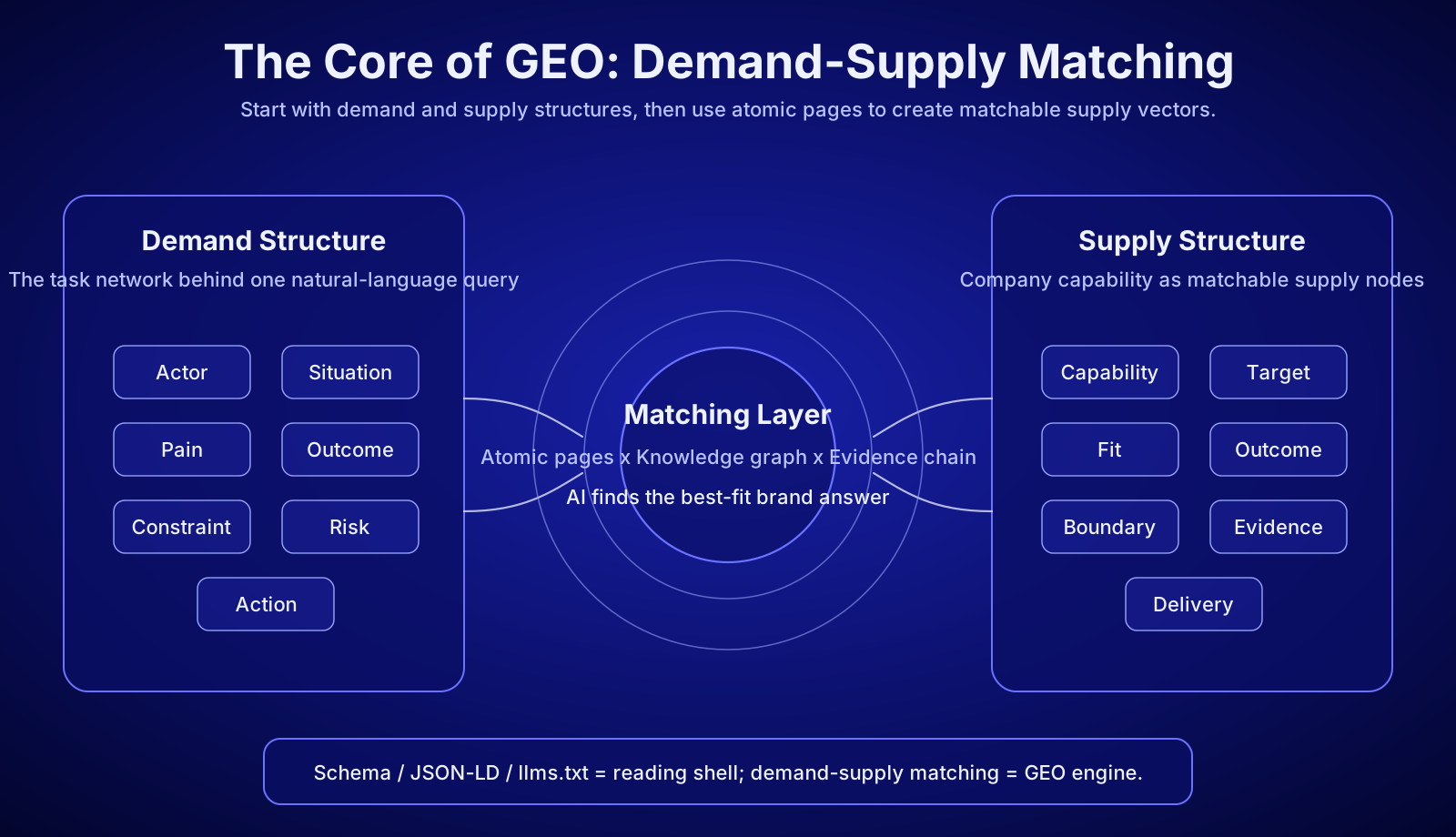
Core claim: real GEO does not merely make pages readable to AI. It builds brand supply into a vector space that can match high-dimensional demand.
Why ordinary GEO is not enough.
Ordinary GEO often focuses on Schema, JSON-LD, FAQ, title structure, and AI-readable summaries. These layers help AI read a page, but they do not answer the deeper question: in which demand context should AI recommend this brand instead of a competitor?
Point and surface: the competitive strategy.
| Layer | Job | AI recommendation value |
|---|---|---|
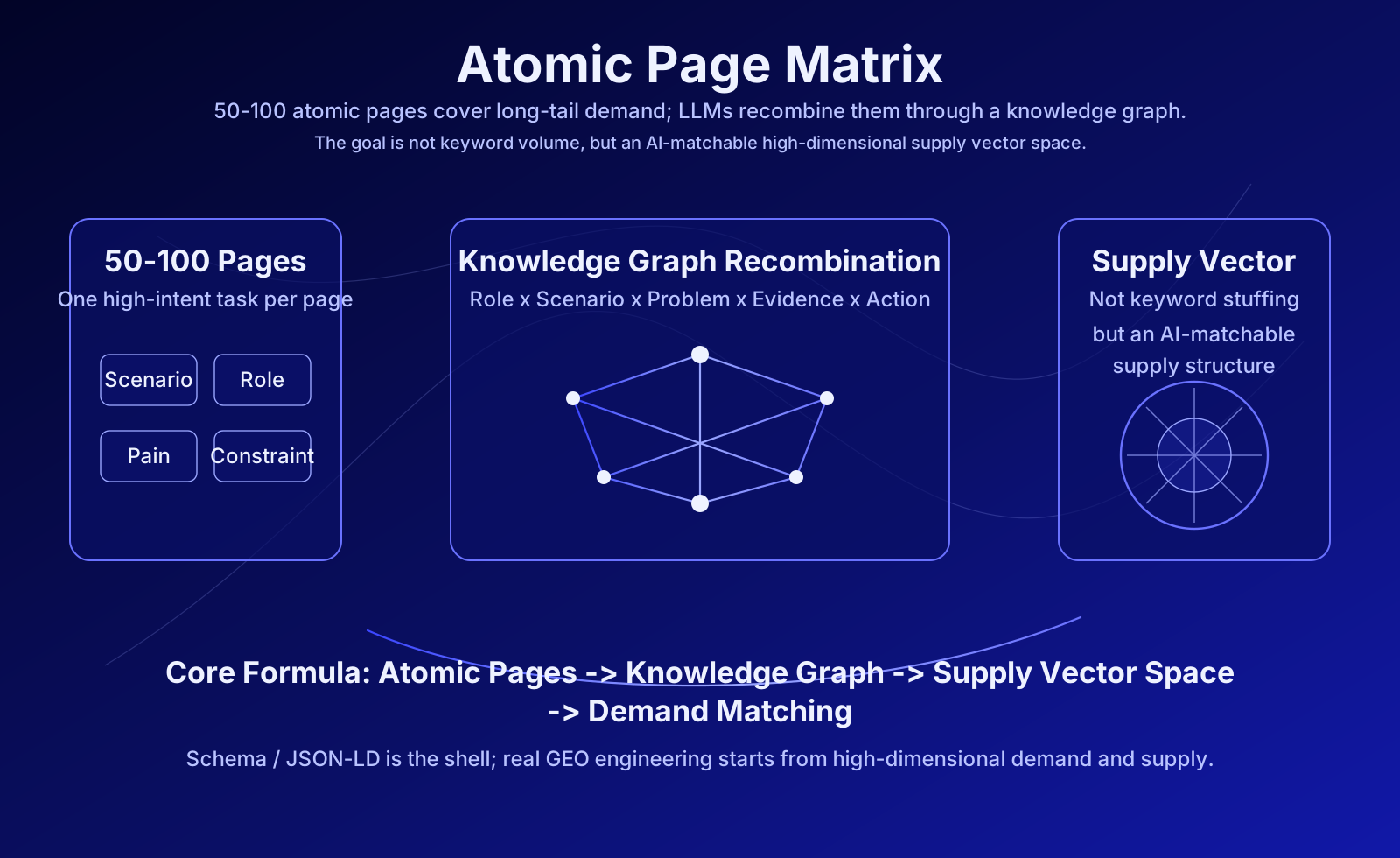
| Atomic page matrix | Use 50-100 focused pages to cover roles, scenarios, pains, constraints, industries, locations, and action paths. | Creates the demand surface where AI can mention the brand. |
| High-density gravity field | Use real conflict, decisive buying factors, value poles, evidence, and citable assertions. | Creates strong demand-point attraction for the best-fit questions. |
| Knowledge graph links | Connect atomic pages, key-point pages, evidence pages, and service pages. | Helps AI assemble complete answers from distributed supply nodes. |
III's high-dimensional GEO standard.
- Does the site model high-dimensional demand before writing keyword pages?
- Does it express supply as capability, target, fit, outcome, boundary, risk, evidence, and delivery?
- Does the atomic page matrix cover enough demand surface?
- Do high-density pages attract the best-fit demand points?
- Are Schema and JSON-LD treated as supporting shells rather than the GEO engine?
Ordinary GEO vs III-GEO.
| Area | Ordinary GEO | III high-dimensional GEO |
|---|---|---|
| Core goal | Make pages easier for AI to read. | Give AI a reason to recommend the brand in high-dimensional demand contexts. |
| Page system | Titles, FAQ, Schema, summary blocks. | High-density key-point pages, atomic page matrices, evidence chains, and internal knowledge graph. |
| Demand model | Keywords and question lists. | Role, scenario, pain, goal, constraint, risk, evidence threshold, and action path. |
| Competitive logic | Seek more AI answer visibility. | Use the surface to cover demand and points to create gravity. |
FAQ
Does this reject Schema?
No. Schema and JSON-LD remain useful, but they are reading layers. Without high-dimensional demand-supply matching, they are only polished shells.
Does point-surface strategy require endless pages?
No. A carefully planned set of 50-100 atomic pages can cover many combinations when the matrix positions are precise.