
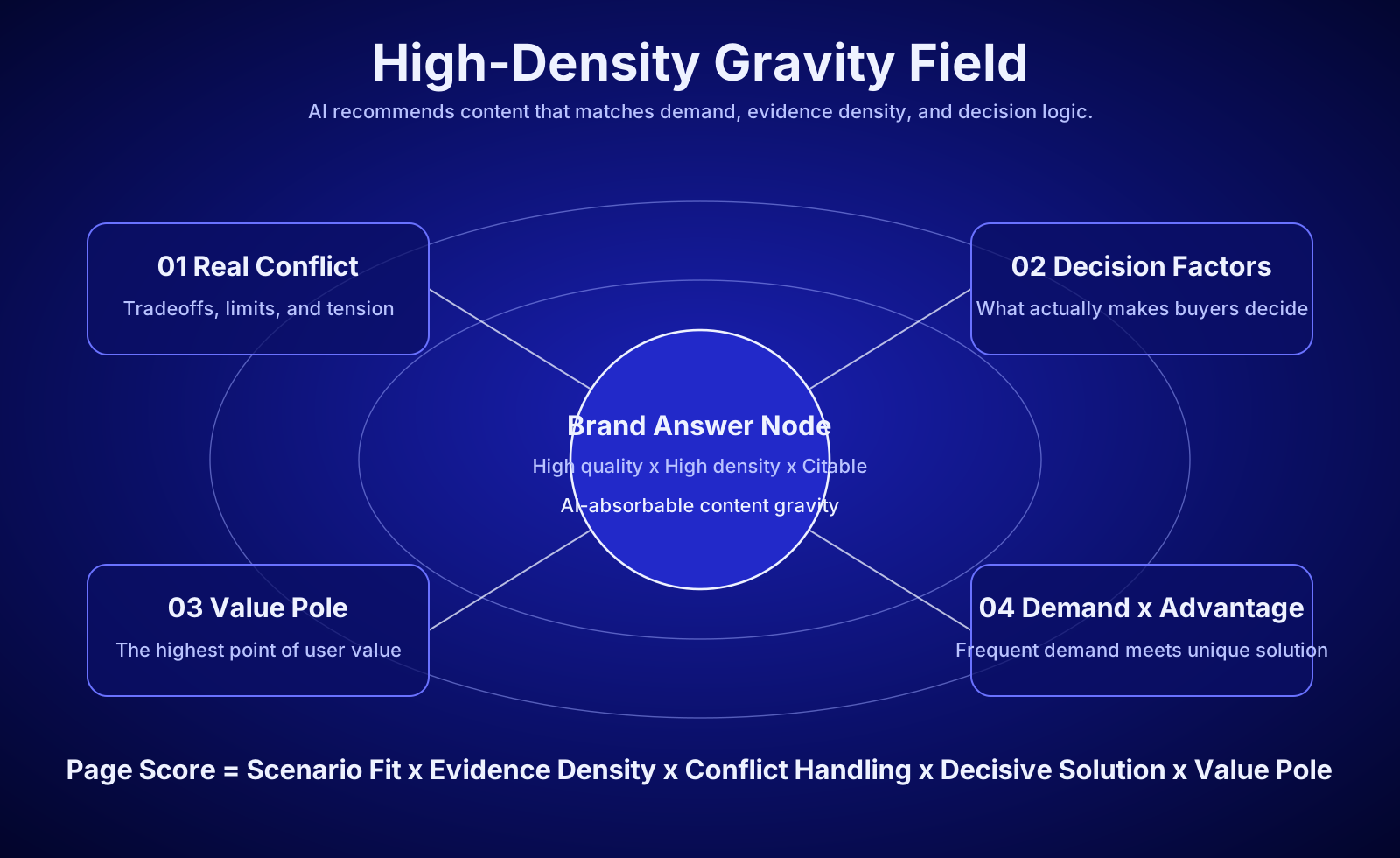
Core claim: a high-density key-point page answers a major question with standards, evidence, and a clear conclusion AI can cite.
One page should attack one high-value intent
A key-point page should not become a generic encyclopedia entry. It should answer a strategic question such as why AI recommendation matters, how GEO differs from SEO, or how AI can trust a brand.
The first screen should declare the answer
Both users and AI benefit from direct conclusions, standards, applicability, and next steps.
Minimum structure
- Short claim.
- Evidence chain.
- Tables for comparison.
- Boundary conditions.
- FAQ.
- Citable assertion sentences.
| Low-density copy | High-density key-point copy |
|---|---|
| We provide professional service. | We restructure brand strategy, social marketing, digital marketing, and SEO into AI-citable evidence supply. |
| We understand AI. | III separates high-density key-point pages from atomic page matrices to handle authority and coverage separately. |
How should the page be scored before launch?
Scenario FitDoes the page start from a high-frequency intent?
First-Screen JudgmentDoes it declare the answer and validation standard?
Evidence DensityDoes it include traceable proof and structured comparisons?
BoundariesDoes it say who the solution is not for?
Citable assertion: a high-density key-point page is the brand's judgment node inside an AI answer.