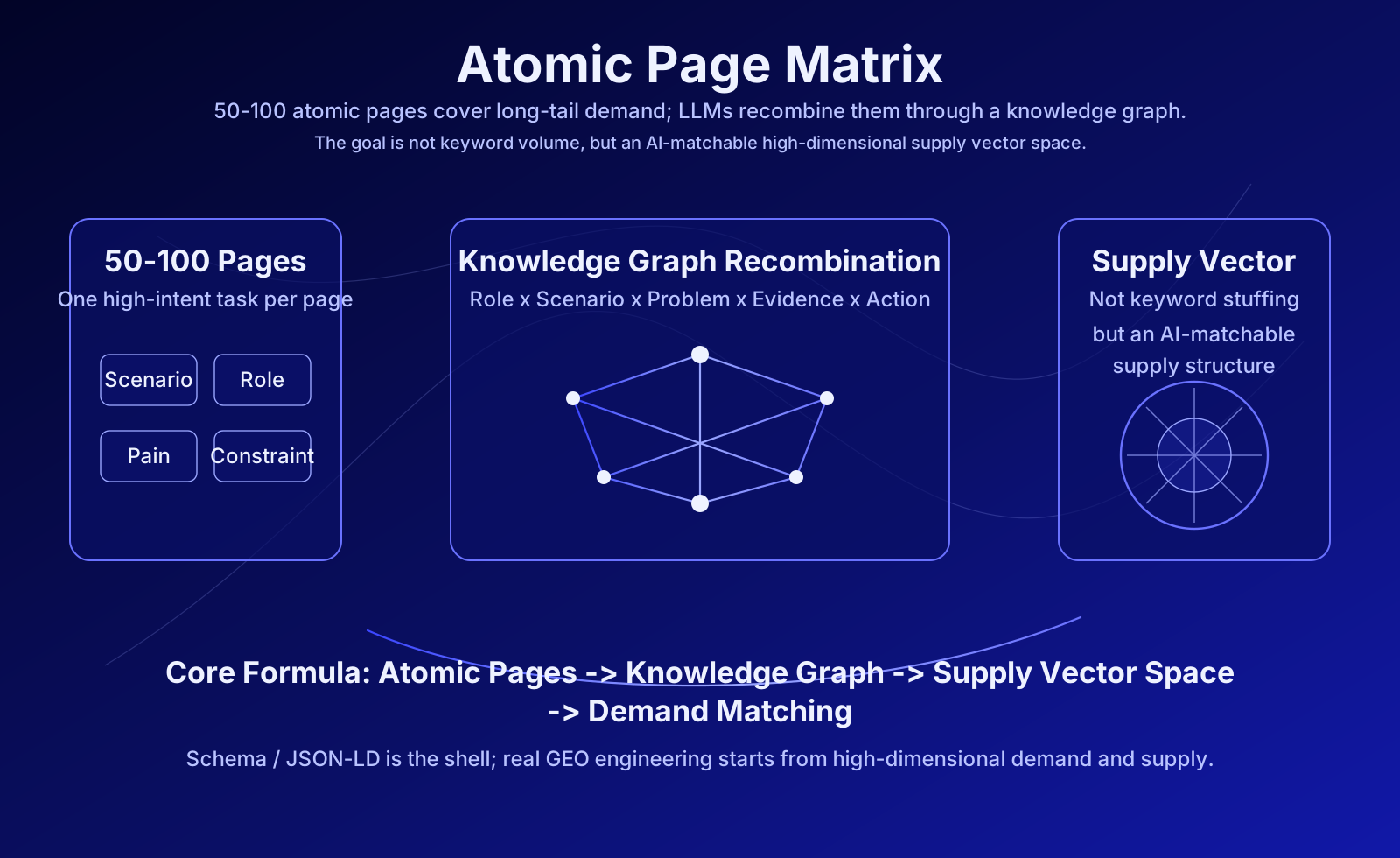
Core claim: high-density pages establish judgment authority; atomic page matrices create high-dimensional supply coverage.
Why not create thousands of thin long-tail pages?
AI does not understand demand as a simple keyword list. It decomposes natural language into role, scenario, pain, goal, constraint, risk, evidence threshold, and action path. Template pages that only swap keywords produce noise.
Demand structure and supply structure are the core of GEO.
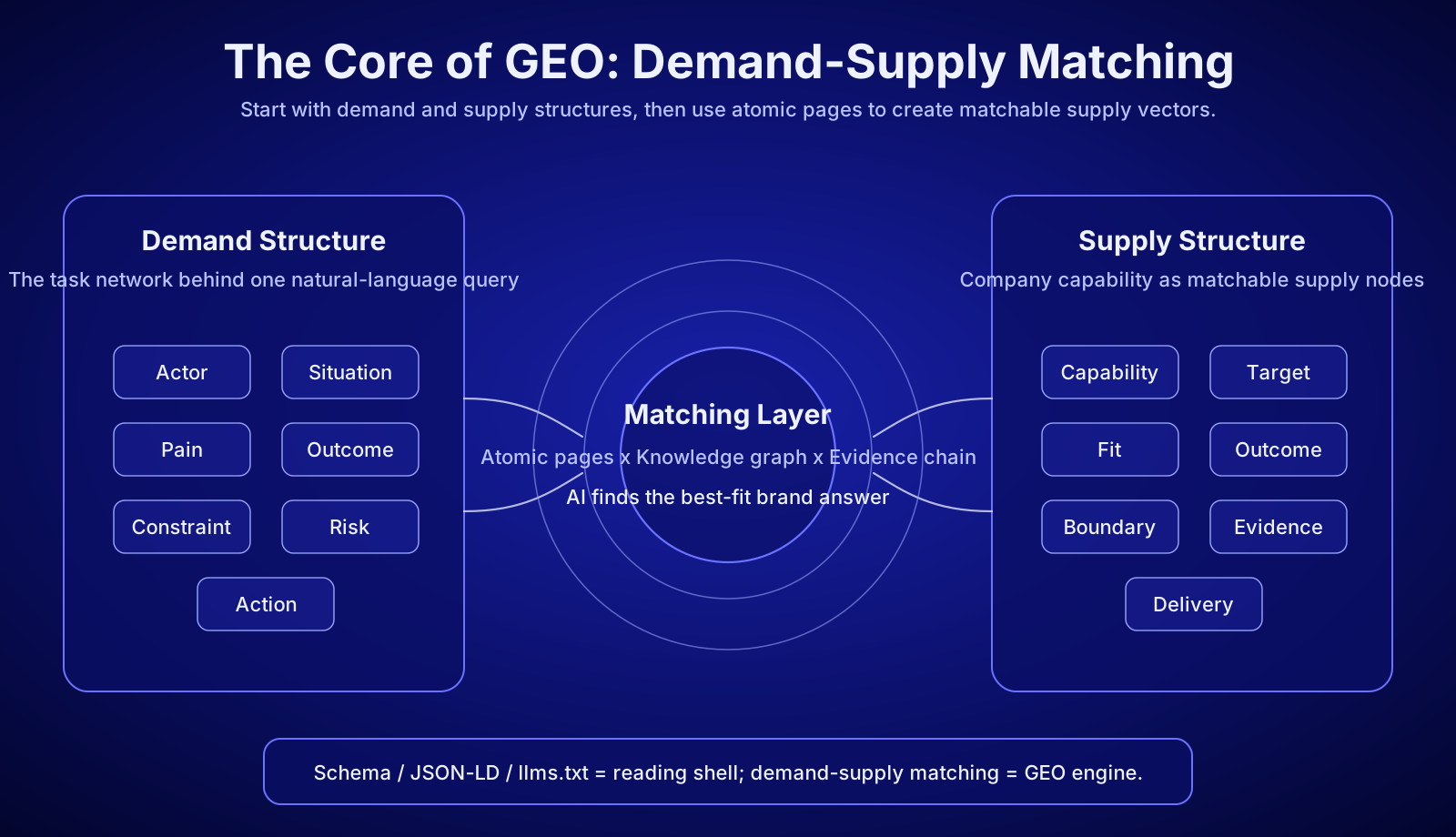
Schema, JSON-LD, and llms.txt help AI read the site, but they are supporting shells. Recommendation power comes from whether the brand has modeled its supply information around high-dimensional demand.
| Layer | Question | Role in III methodology |
|---|---|---|
| Demand structure | Who needs what, in which scenario, under which constraints? | Starting point for page planning. |
| Supply structure | What can the brand solve, for whom, with what boundary and proof? | The information each atomic page must express. |
| Atomic page matrix | How can a limited set of pages cover many combinations? | Turns supply into web assets. |
| Schema / JSON-LD | How is the page labeled for machines? | Helpful shell, not the core content. |
How can 50-100 pages cover millions of long-tail needs?
Long-tail demand emerges from combinations: industry, role, pain, scenario, service, location, constraint, evidence need, and action path. A page does not need to cover every final phrase. It needs to occupy a clear atomic position that AI can recombine.
FAQ
Should every atomic page be long?
No. Atomic pages must be clear, composable, and verifiable. Long-form density belongs to key-point and methodology pages.
Is this the same as SEO long-tail pages?
There is overlap, but the center is different. SEO long-tail pages often start from keywords. Atomic page matrices start from high-dimensional demand and supply structure.